onsdag den 12. marts 2014

Understanding How Business Goals Drive IT Goals

Sometimes great things happen to you, and yesterday I ran into an article by the very interesting name: “Understanding How Business Goals Drive IT Goals”. It is written by IT governance institute (ITGITM) which is a non-profit, independent research entity that provides guidance for the global
business community on issues related to the governance of IT assets.

In the introduction they write:

In today’s complex and constantly changing business world, IT’s alignment to the business and IT governance are high on the agenda of executive management. Strategic planning based on the alignment of IT goals to business goals is a key component in business/IT alignment. It is important that an enterprise start with a clear view of its mission and a thorough definition of its supporting strategy and business goals. This then needs to be translated into goals for the IT department, which are the basis for the IT strategy. Finally, the supporting IT processes must be carefully planned to translate the IT strategy into action. For these planning efforts, enterprises may be looking for guidance to identify the set of important business goals and IT goals, and how they interrelate.


The article goes on and describes a set of top ten business goals and how they relate to a set of IT goals. It gives you a great input on how to work with translating business goals and work with them when you are in a management position and desperately needs that next IT strategy for your business and IT department. The list can inspire you on how the business and IT correlates and it goes very nicely with the Strategic alignment model I have described in my blog.

The article goes on and describes in detail business goals for certain business areas as for example: “Manufacturing and Pharmaceuticals Sector” or “Government, Utilities and Healthcare Sector”

I must say when looking at the list for healthcare I like what I see. The five first is:

  1. Maintain the security (confidentiality, integrity and availability) of information and processing infrastructure. Operational
  2. Align the IT strategy to the business strategy. Corporate
  3. Make sure that IT services are reliable and secure. User
  4. Ensure IT compliance with laws and regulations. Corporate
  5. Translate business functional and control requirements into effective and efficient automated solutions. User
And that is a great crosswalk between operational goals and development and new initiatives (goals). Looking at Nyt OUH and our coming hospital to be, we have two major constrains or goals set by the state. 20 pct fewer beds and therefor an increase in ambulatory production and a 8 pct efficiency increase. The 8 pct is about 400 mill dkr, which must be found year one after the new hospital is in use.  I guess number 2 and 5 in the above list addresses that issue.

How can IT, new equipment and digital solutions help the hospital succeed and reach those goals?.

If, lets say 40 pct of the 400 mill is supposed to be harvested by new innovative IT solutions, then it is time to discuss how it is done. We need a well defined process and a method, that will bring us closer to the right solutions.

It takes time, money and resources to choose, implement and operate those solutions – We need to make the right choices, so our money is spent wisely and in accordance to our business goals – otherwise it is IT for ITs sake – and that will not necessarily generate more efficiency or reduce the number of beds we need.

tirsdag den 4. marts 2014

Never let perfect be the enemy of good

I attended Himss 14 in Orlando last week. I participated in the Nordic ehealth exchange program, which I found was a great success. We discussed in the Nordic group on which strategy to implement within our countries, regions or hospitals. Best of breed or best of suite. Let me tell you, nothing is easy within the healthcare IT sector and that question especially fuelled a lively debate between my Nordic colleagues. A representative from Kaiser Permanente introduced the term “Integrated suite approach”, where I guess the best of both worlds unite into a seamless integrated platform for the individual clinician.  Utopia or reality? Well I like the term and it is probably that rather pragmatic approach we all take, because no suite can handle it all and silo best of breed needs integration.

Besides the above I learned through a short status from Island (all countries gave one) that they have decentralised databases and by a quick calculation – they have a fragmented EHR landscape with approximately 1 DB pr 23.000 inhabitants.! I guess it is not easy even for small countries.

But as a general learning point we all are battling with the same issues. Less founding, more elderly and conical patients – You all know the song. When you try to fix the problems and do better every day for the good of the patients one thing is certain. Small steps where you test, learn, correct, test etc is crucial. We tend to fix everything in one project and the risk it introduces is just enormously. As one said –

Never let the perfect be the enemy of good.

I guess it is correct when you do business process improvements either by IT or other means of change. In Odense we are building a hospital on a bare field, and even though we can start all over, we also have to work with legacy systems, old habits and organisational forms and local desires. But maybe we are in a unique position to really try the business process re engineering? We are going to try a total different approach on our way of delivering logistics.

I hope it is for the better for I know it will never be entirely perfect.

Thank you all my Nordic colleagues for an intriguing 3 days in Orlando. We can do much on our own, but even more together – And the Nordics are in front – let us keep that way. My only regret is that I did not engage with other participants as much as I should have done - I guess it is my loss.. but hey..see you all next year.
----------
Read more: Is the correlation between business and IT strategy yesterday’s struggle?
Read more: Centre for Innovative Medical Technologies, CIMT  

tirsdag den 11. februar 2014

The new superhero of digital hospitals

I am going to Himss 14 in Orlando. For people like me in the cross-section between IT and the clinical area - Orlando and Himss 14 is the place to be. Furthermore there is a Nordic package, where we attend specific topics together, network and learn from each other. It is usually very rewarding, and I am looking forward to meet with me colleagues from the north.

So in order to get ready and prepare for a week of discussion, inspiration, networking and learning, I have prepared a little resume of the Danish hospital building projects in general and more specific on the project we are conducting here in Odense - Denmark.

Below are a short video on the project of building New Odense University Hospital - at least the digital side of things.

With a new hospital build from scratch on a bare field, we have the privilege to start over and rethink, yes almost everything. Of course we are part of a Region and yes we have 800+ legacy systems - but now is the time to be brave and exploit innovation and embrace new technology  - if we do not seize it history will judge us badly, and the new hospital will not be as super as it might have been.

See you in Orlando!

The New Odense University hospital at a glance:


fredag den 24. januar 2014

Top 10 forudsigelser der vil påvirke sundhedsområdet og den digitale understøttelse

IDC kom med deres EMEA 2014 TOP TEN PREDICTIONS: Aiming for the Competitive Advantage for nylig. Her skriver de om de trends, de ser i markedet for Europa og Mellemøsten indenfor sundhed og digital understøttelse.

Det er spændende og sjov læsning, og mest af alt er det interessant, at kigge indad og vurdere om egen organisation er en del af trenden eller man falder ved siden af. De beskrevne trends er målrettet virksomheder, der ønsker en konkurrence mæssig fordel i det dynamiske sundhedsmarked - Men er din organisation klar til at modtage disse ydelser, eller har IDC skudt helt ved siden af ?

Uddrag:

Yesterday, the IDC Health Insights team unveiled the 2014 Top 10 predictions for the healthcare providers market in the EMEA region. These 10 predictions identify trends that will impact healthcare business and information technology decisions in EMEA region for 2014 and the next three to five years. The ten predictions have been structured along three main themes that are impacting business and care delivery in the region. The predictions set aims to help executives in the development and the execution of strategies delivering a competitive advantage in these times of profound change in the healthcare industry.

God weekend

ps. I dag åbner CIMT

tirsdag den 21. januar 2014

Is the correlation between business and IT strategy yesterday’s struggle?

I have, on several occasions, written about the correlation between the corporate business vision and strategy, and the IT strategy. How one forms the other and how clinical IT can transform the healthcare system. OUH has a clear research profile in its development plan (strategy) towards 2014, with exact goals and intentions. This should be apparent in the IT strategy as well, where certain paragraphs should address the research goals, and as to how IT can support this with solutions that bring the hospital closer to realizing said goals.

A sound theoretical model as basis for your work is the Strategic Alignment Model (SAM) which the University of Aarhus teaches in one of the courses in which I’m the examiner.

However, is it actually as simple as I sometimes imply? Something says it is not. Hospitals are often run according to operational settings, and because of this, strategy needs to be adjusted continually to prevent downtime in operation, decrease in quality or that everything simply stops due to unsuccessful IT initiatives in which effect cannot be measured before (maybe) 2-4 years.

I read an article in Computerworld regarding IT strategy where the managing director of Delta presents his strategy through 16 slides. This made me consider if you, as the theory has it, can plan and adjust continually or if the complete connection between business and IT strategy is more of a theoretical concept than a practical option. The truth is none of the above - simple as that – but then what?

Raf Cammarano suggests an answer in his article ”Why Business-IT Alignment is Yesterdays’ War” to what it is that is so difficult. He argues furthermore that instead of correlation you have to aim for synchronization. The difference, as I perceive it, is that correlation is more static while synchronization is an ongoing process, where one initiative or a new direction in the business strategy results in an immediate IT strategy adjustment. In the 16 slides presented by Delta this organic approach is the simpler one. It becomes, however, imperative that you ensure that everything isn’t always in play. Lucid goals and visions and a defined framework must be maintained to avoid perpetual leniency.

Raf Cammarano mentions a line of points that preclude seamless correlation (alignment). These are:

”Unfortunately there are four types of lag that make it almost impossible for IT Departments to stay synchronized with the organization:

  • Stimulus lag: the delay between the business changing course and IT finding out about it
  • Response lag: the delay between IT finding out about the change and deciding what to do about it
  • Execution lag: the delay between IT deciding what to do and actually doing it.
  • Results lag: the delay between IT completing what it needed to do, and the business seeing the results.
 In an ideal world there would be no lag and IT would be perfectly synchronized with the rest of the organization. Although we don't live in such a world, CIOs should nonetheless aim to reduce each of these lags as close to zero as possible.”

However, my point is not to cancel the discussion of business versus IT. On the contrary, it is more important than ever and we need to consider this more often than every three years, when the business releases a new strategy.

If this does not happen then the whole correlation will vanish and IT becomes short sighted and operation oriented, losing planning, correlation, synchronization and strategy in the process.

mandag den 20. januar 2014

Er sammenhængen mellem forretnings- og IT strategi gårsdagen kamp?

[Available in a English version.]


Hvordan den ene former den anden. OUH har en tydelig forskningsmæssig profil i deres udviklingsplan (læs: strategi) frem til 2014, med klare mål og hensigter. Dette bør så afspejles i IT strategien, hvor en række afsnit bør adressere forskningsmålene og hvorledes IT kan bakke op med løsninger der bringer hospitalet nærmere en realisering af disse. 

En god teoretisk model at arbejde ud fra er Strategic alignment model (SAM) som Århus Universitet underviser i på ét af de fag hvor jeg er censor.

Men er det nu så nemt som jeg nogle gange nemt insinuerer? - noget tyder på det ikke er. Hospitaler er ofte  drevet af driftsmæssige rammer, og dermed vil strategien ofte løbende skulle justeres, så driften ikke går ned, falder i kvalitet eller helt stopper pga forfejlede IT initiativer der først skaber en effekt (måske) om 2-4 år.

Så læste jeg en artikel i Computerworld omkring IT strategi, hvor den adm dir i Delta præsenterer sin strategi via 16 slides. Dette fik mig til at overveje om man, som teorien beskriver det, kan planlægge og justere løbende eller om den fulde sammenhæng mellem forretning og IT strategi mere er et teoretisk begreb end en praktisk mulighed. Sandheden er hverken eller – nemt svar – men hvad gør man så?


Raf Cammarano i sin artikel: Why Business-IT Alignment isYesterday's War kommer med et svar på, hvad der er svært. Han skriver desuden, at i stedet for en sammenhæng, så skal man gå efter synkronisering. Forskellen, som jeg forstår det, er at sammenhæng er mere statisk, mens synkronisering er en løbende proces, hvor ét initiativ eller en ny retning i forretningsstrategien afføder en justering i IT strategien umiddelbart. Med 16 slides som Delta præsenterer, er denne organiske metode nemmere. At man så skal sikre sig at alting ikke altid er i spil, er derfor mere centralt. Klare målsætninger, klare visioner og rammer bør være på plads, så alting ikke flyder i en uendelighed.

Raf Cammarano nævner en række punkter der umuliggør en sømløs sammenhæng (alignment). Disse er:

”Unfortunately there are four types of lag that make it almost impossible for IT Departments to stay synchronised with the organisation:

  • Stimulus lag: the delay between the business changing course and IT finding out about it
  • Response lag: the delay between IT finding out about the change and deciding what to do about it
  • Execution lag: the delay between IT deciding what to do and actually doing it.
  • Results lag: the delay between IT completing what it needed to do, and the business seeing the results.

 In an ideal world there would be no lag and IT would be perfectly synchronised with the rest of the organisation. Although we don't live in such a world, CIOs should nonetheless aim to reduce each of these lags as close to zero as possible.”

Min pointe er sådan set ikke, at aflyse forretning contra IT snakken. Pointen er derimod, at den er vigtigere end nogensinde og den bør tages oftere end hvert tredje år, hvor forretningen udkommer med en ny strategi. 

Hvis ikke dette sker, ryger den totale sammenhæng og IT bliver kortsigtet og driftsorienteret, og det er der ikke meget planlægning, sammenhæng, synkronisering eller strategi i.

mandag den 6. januar 2014

Opsamling af personlige motionsvaner gør os mere sunde og giver bedre sundhedsdata


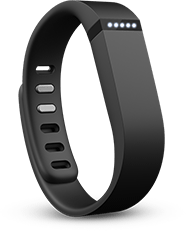
 I december holdt jeg barsel, da Theresa og jeg fik tvillinger. I den forbindelse testede jeg en af de nye weareble computing devices kendt som FitBit Flex. 

Jeg har tidligere skrevetom den revolution vi står overfor, når basale værdier og data om hvert enkelt menneske/patient opsamles og kombineres samt benyttes i en sundhedssammenhæng. 

For at få en god og grundig anmeldelse af fitbit kan jeg henvise til Computerworlds hjemmeside.

Min test gik ud på, at fitbit skulle benyttes af hvert familiemedlem i én uge og så skulle man svare på spørgsmål bagefter. Generelt var opfattelsen, at fitbit var sjov og nem at bruge. Det gjorde, at vi som familie talte meget mere om kost og motion, end vi tidligere havde gjort. Ditte på 12 år var så ærgelig over, at hendes første dag med fitbit resulterede i 50 pct færre skridt end Laurits på 8 år havde taget. Dette gjorde, at hun dagen efter altid tog trapperne på skolen, og valgte aktive aktiviteter i frikvarteret - alt dette for at "slå" sin lillebror på aktivitetsniveau. jeg testede den op imod mit Garmin løbe ur og de opsamlede data var overraskende ens, på trods af at Fitbit registrerer rystelser og "oversætter" disse til skridt, mens Garmin benytter GPS.

Alle glemte indtil flere gange at ændre fitbit til sove tilstand, og med tvillinger i huset, skulle jeg ændre sove, vågen, sove vågen mange gange. Men når det skete, var det sjovt at se mit natlige mønster bagefter.

Ingen benyttede muligheden for registrering af mad eller kostvaner (primært pga at databasen var på engelsk). 

Alle var enige om, at  Fitbit var sjov og havde en vis nyhedsværdi overfor familie og venner. Det ville være ok at dele data, og en konkurrence med venner var også en ide, der ofte kom op. Fitbit app til Iphone blev løbende tjekket, og websitet blev stort set ikke besøgt.

Personligt savner jeg integration til mit Garmin  løbeur, så alle mine helbredsdata samles i et website. Dette også oplysninger som puls. Alle i familien var enige om, at Fitbit registrerede for få data og et integreret ur ville gøre underværker (findes i næste version.)

Derudover benyttede vi faktisk fitbit i en klinisk situation, da Theresa var indlagt i én uge efter fødslen. Her kunne vi ret præcist vise sygeplejersken og lægen, hvor meget Theresa havde været aktiv, hvor meget hun havde bevæget sig, og på den måde få et mere objektivt billede af hende fysiske aktivitet under indlæggelsen.

Vores sove/vågen tilstand var også registreret, så når vi var i tvivl om hvornår tvillingerne sidst fik mad, kunne vi læse det via vores fitbit data. De opsamlede data brugte vi i dialog med hospitalets personale til stor glæde og humør for alle parter. 

Et simpelt, men ret konkret værktøj til dialog mellem patient og behandler.

Vores helt uvidenskabelige familie spørgeskema kan downloades her